
River Water Rejuvenation
Through Optimization of Municipal Sewage Treatment Plants
This presentation examines STP operational inefficiencies and proposes Odour Eliminator Decomposer (OED) as a cost-effective and scalable solution to enhance biological treatment processes and improve river water quality.
01
Improves STP biological performance
02
Supports cleaner river discharge
03
Reduces odour, sludge and process instability
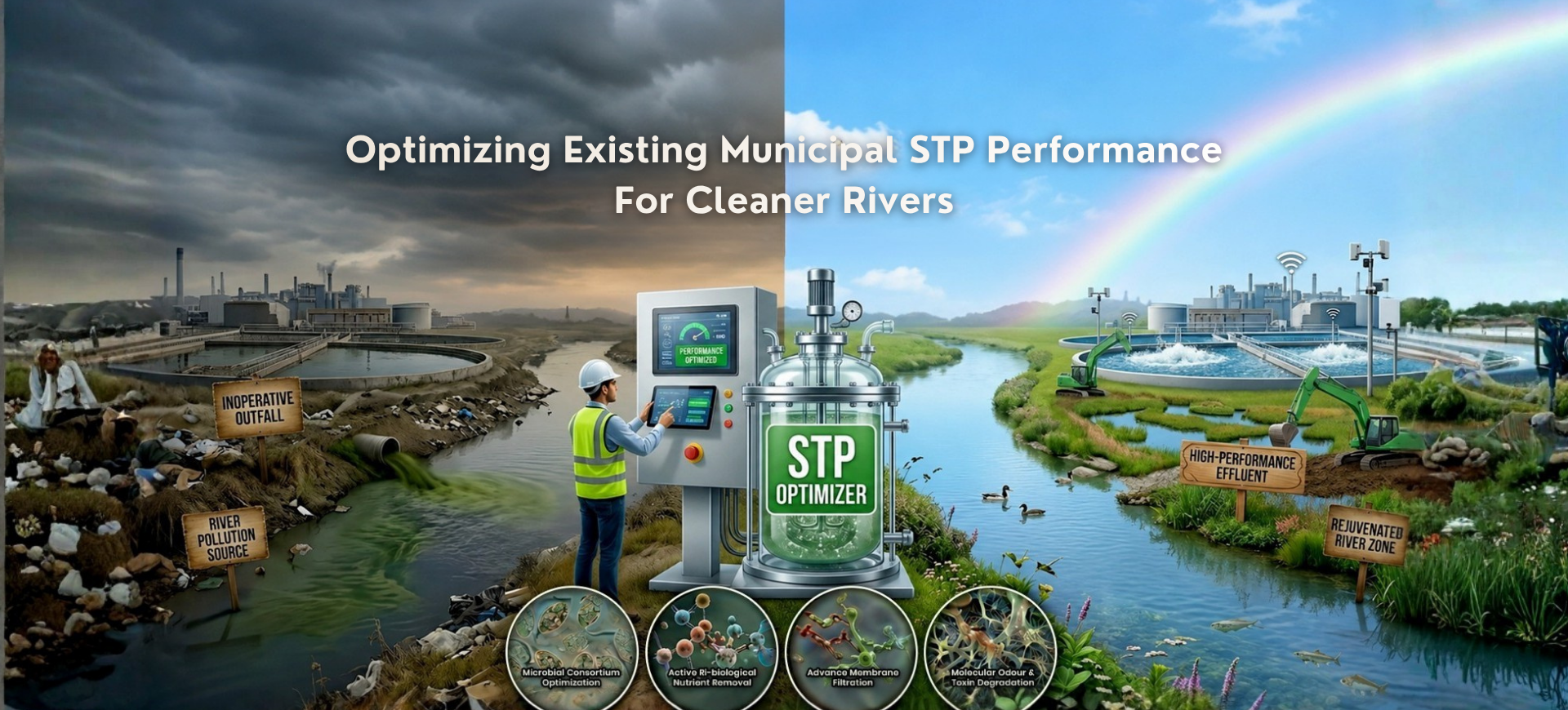
The Real Problem Statement
River pollution remains a critical environmental challenge despite the widespread installation of municipal Sewage Treatment Plants (STPs). These facilities are designed to treat sewage through biological processes before discharge into natural water bodies.
While factors such as population growth and industrialization are often blamed, the underperformance of existing STPs plays a significantly responsible role in this situation.
How did the rivers remain clean for hundreds of years without STP plants?
1. Natural River Self-Purification
Before 1970, the large population of indigenous cattle played a crucial role in maintaining soil health. Agricultural soils were rich in diverse native microorganisms, supported by indigenous cow dung and cow urine.
During irrigation and rainy seasons, these microorganisms were transported to river systems, resulting in continuous and natural microbial replenishment.
Rivers originating from mountainous regions underwent cascading flows, which promoted natural aeration and increased dissolved oxygen levels.

2. Current Wastewater Treatment Process
Modern wastewater treatment systems handling domestic sewage, municipal wastewater and industrial effluents are primarily based on biological processes.
Activated Sludge Process
Moving Bed Biofilm Reactor
Membrane Bioreactor
Sequential Batch Reactor
These systems operate on suspended growth or attached growth mechanisms where microorganisms oxidize organic matter in the presence of oxygen.
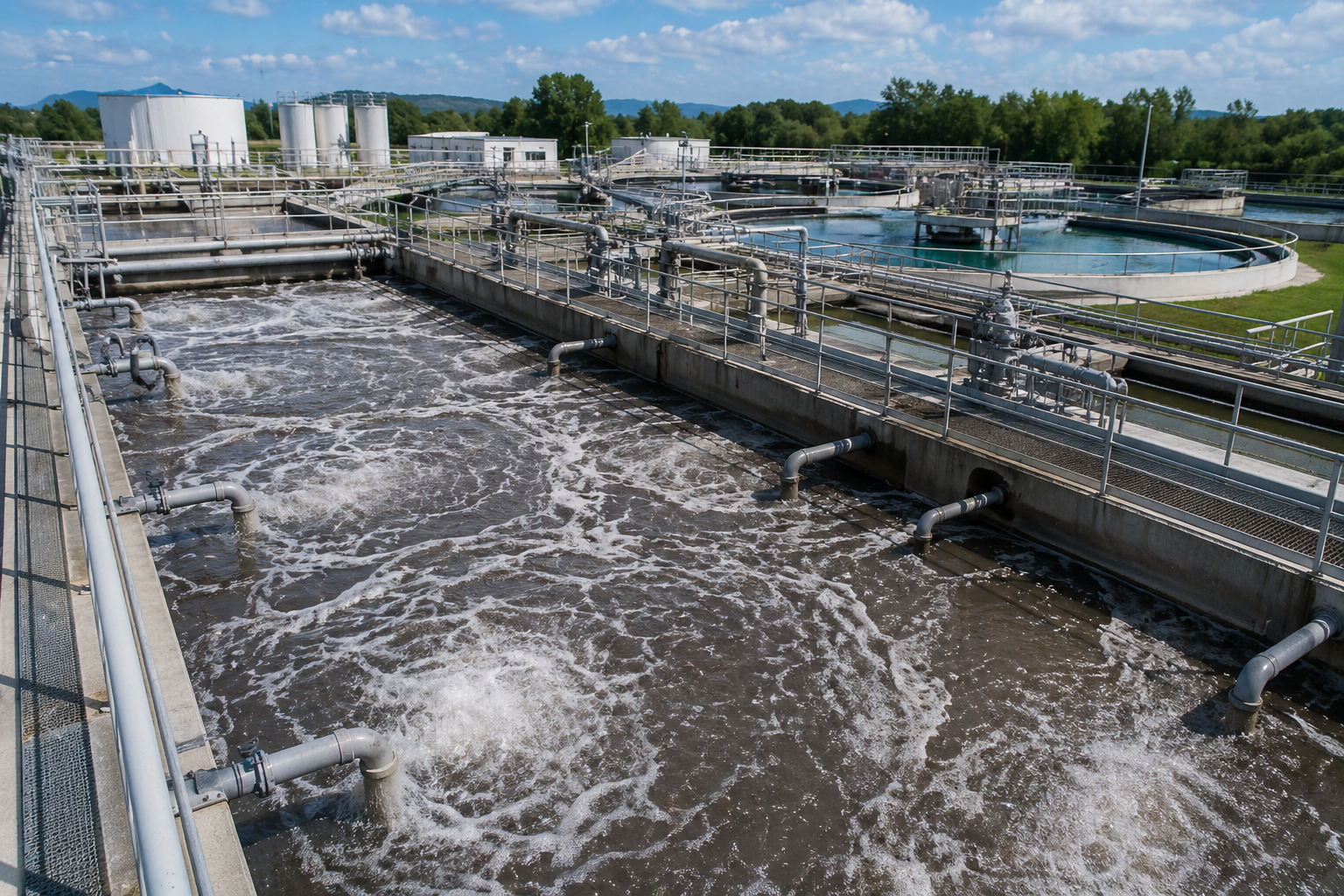
3 Key Challenges in STP Operations
01
Shock Load Variations
Organic loads in municipal wastewater vary significantly throughout the day. These fluctuations disrupt biological stability and reduce treatment efficiency.
02
Process Instability
Equipment failure, power outages or operational errors disturb microbial activity, leading to incomplete treatment and inconsistent performance.
03
Odour Generation
Foul odour is caused by decay of accumulated organic matter in dead zones such as pipe bends, joints, valves and tank corners.
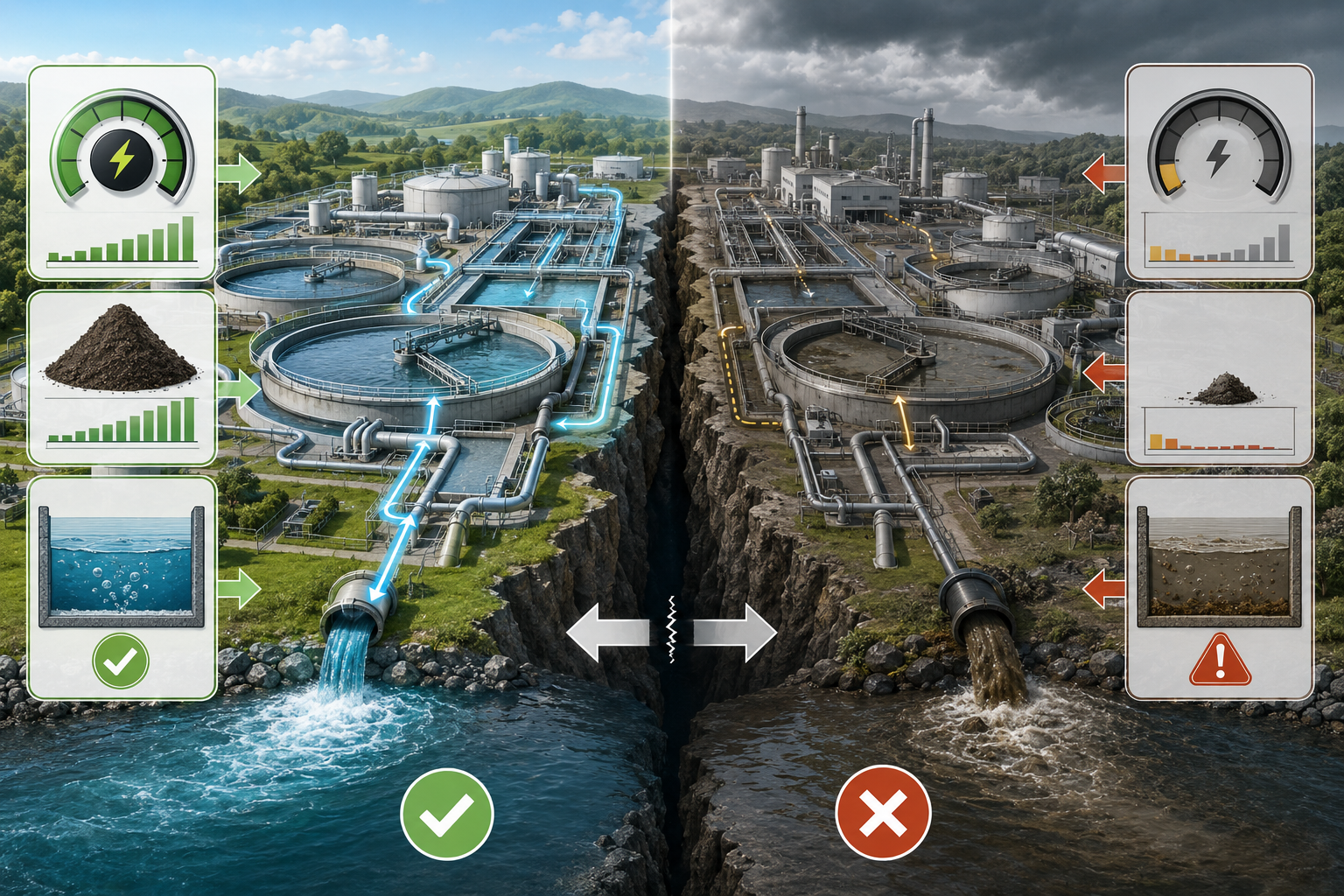
4. Gap Between Designed and Actual Performance
A significant discrepancy exists between the designed capacity of STPs and their actual operational performance.
Electricity usage is often far below expected levels, suggesting underutilization.
Sludge generation is much below expected levels.
Partially treated wastewater gets discharged into rivers.
This gap indicates that plants are not operating at their intended capacity or efficiency, leading to inadequate wastewater treatment.
The Proposed Solution
Odour Eliminator Decomposer
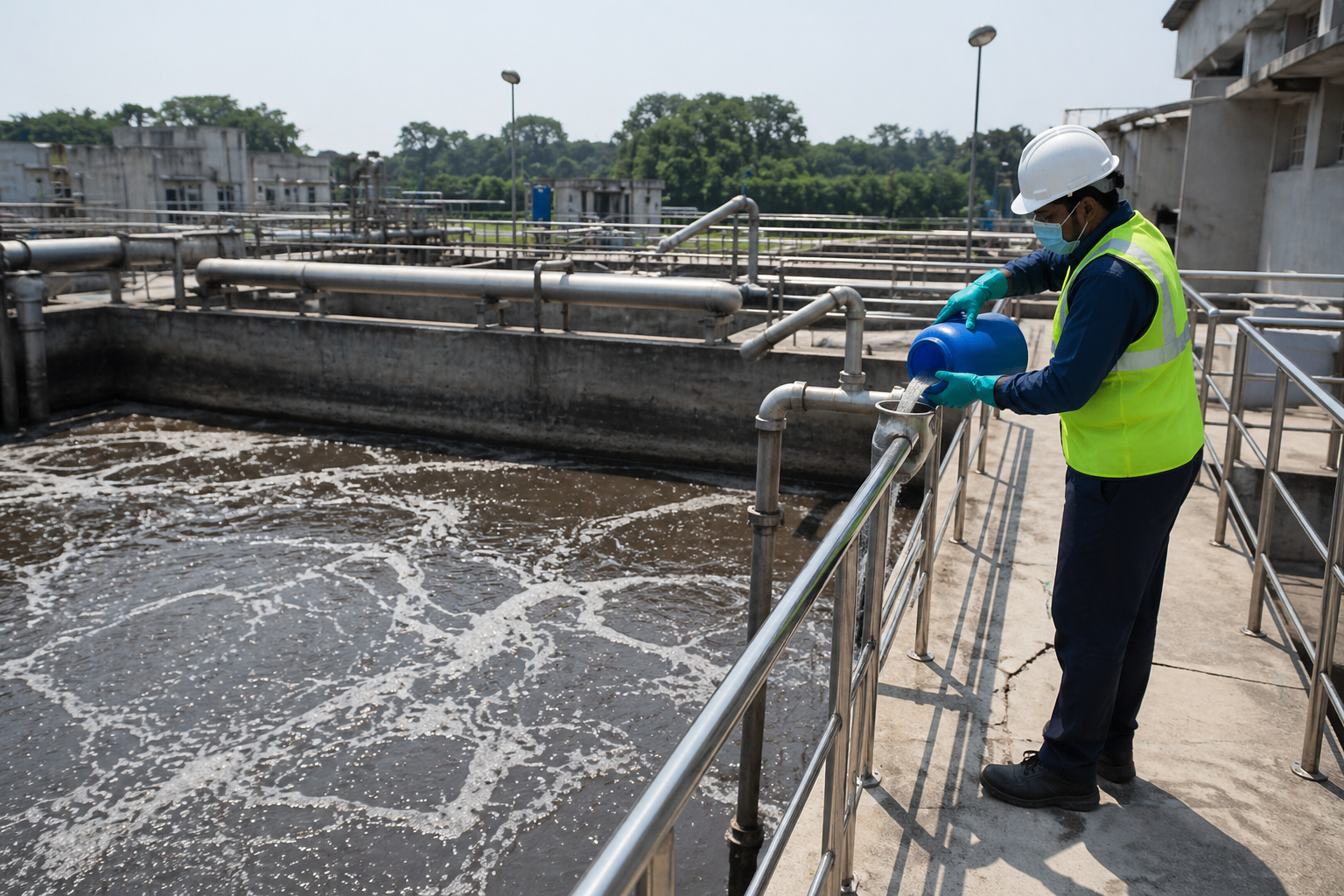
OED is applied in the equalisation tank, where a diverse microbial population is introduced at the initial stage of treatment.
Enhances decomposition of organic matter
Reduces sludge accumulation across the system
Significantly minimizes odour generation
Recommended Dosage:
10 litres of OED per day for a 1 MLD STP
Key Benefits of Using OED
Improved efficiency and performance of STPs
Improved water quality and reduced river pollution
Stabilization of biological processes
Faster troubleshooting and recommissioning
Lower load on tertiary treatment systems
Reduced mosquito and odour-related issues
Case Study 50 MLD Municipal STP in Pune City
Background
During tenure as O&M In-Charge from 2007–2010, the plant was operating significantly below its design capacity.
Breakthrough Innovation
Introduction of microbial culture OED in the Primary Settling Tank significantly reduced the organic load entering the aeration tank.
Key Challenges
Heavy sludge accumulation of 55–60 tonnes
High inlet BOD levels
Inefficient blower performance
Fouled diffusers affecting aeration efficiency
Suboptimal sludge management
Interventions
Removal of accumulated sludge
20–25% reduction in inlet BOD
Replacement of undersized heat exchanger
Cleaning and reinstallation of diffusers
Improved maintenance practices
Results
Improved biological stability
Achievement of design capacity
Superior outlet water quality
Successful implementation of OED
Experience and Clients
70–80+
Wastewater treatment plants optimized from 2011–2019
15+
Municipalities in Odisha where odour control was successfully implemented
6+
Cement plants utilizing RDF where offensive odours were controlled
OED has also been supplied to three industrial units of Reliance CBG Industries for odor removal of press mud and has proven effective in sanitation systems, where it helps control flies and mosquitoes due to its natural larvicidal properties.
Final Conclusion
River rejuvenation efforts must go beyond infrastructure expansion and focus on optimizing the performance of existing assets.
The Odour Eliminator Decomposer offers a sustainable, economical and scalable solution to enhance biological treatment processes.
“Optimizing the already existing STPs is the fastest route to cleaner rivers.”