
INTRODUCTION
Agriculture since past 4 decades is faced with lot of environmental concerns like soil contamination, soil erosion, pesticide residues, lack of organic carbon. Farmers are continually dependent on more chemical fertilizers, thus, making the farming financially unprofitable and UNHEALTHY for human consumption.
Fertile soils, nurtured for centuries, have turned barren in mere decades due to the decline of indigenous (DESI) cow populations, less availability of nutrient-rich cow dung/urine, and the subsequent reduced earthworm populations and microbes in the soil.
PROBLEM STATEMENT
Important problems that today’s farmers are facing regarding SOIL HEALTH
Soil has become hard and compact.
Organic Carbon of soil is reduced.
Soil fertility is reduced.
Soil salinity & Soil pH is increased.
Earthworm activity in the soil has noticeably decreased.
The soil is absorbing/percolating water too slowly, leading to waterlogged crops.
Productivity of crop is reduced.
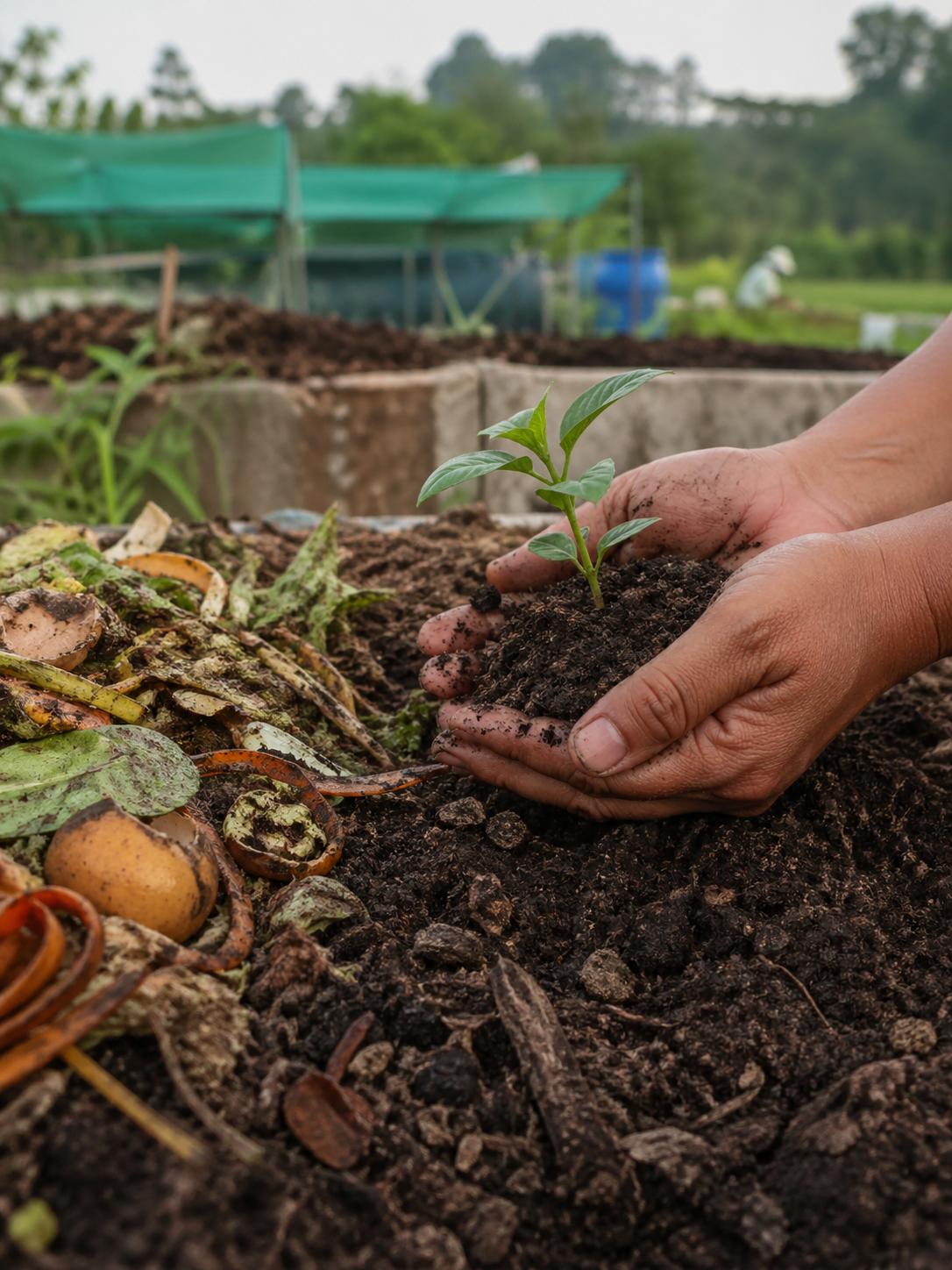
The Ultimate SOLUTION
Microbial Diversity & Soil Carbon
Jeevamrut concentrate is based on high microbial diversity and microbial count having native bacteria & fungi and known for its effectiveness in enhancing soil organic carbon.
Indigenous Cow-Based Bio Solution
It is bio solution derived from Indigenous cow dung-urine, along with ingredients like curd, milk, old desi ghee, vermi-wash, jaggery and honey. It is highly scalable while having shelf life for minimum 2 years.
ROOT CAUSE ANALYSIS? Why Soil Microbes are depleted drastically
Rural India’s joint family culture managed of large herds of livestock that is indigenous cows, sheep, and goats etc—which provided an abundant supply of nutrient-rich dung and manure for farming.
Soil Health Impact
Green Revolution
Food grain shortages led to the Green Revolution, which introduced chemical fertilizers to boost crop yields.
While natural soil fertility initially maximized the impact of chemical fertilizers to drive high yields, the credit was misattributed solely to the chemicals. This led to a dangerous oversight: completely ignoring the soil’s inherent health.
The Reason for Reduction of Cow Population
Rural-to-Urban Migration: Population shifts driven by economic and livelihood opportunities have severely hindered rural livestock management.
Impact on Livestock: This transition caused a steep decline in the population of indigenous (Desi) cows.
Ecological Consequence: The resulting shortage of cow dung and urine disrupted soil microbial communities, directly contributing to soil degradation.
White Revolution: The extensive introduction of foreign Jersey cows to increase milk production displaced indigenous (Desi) cows. Consequently, the soil lost a vital source of microbe-rich dung and urine, as Jersey cow waste is less beneficial to soil health.
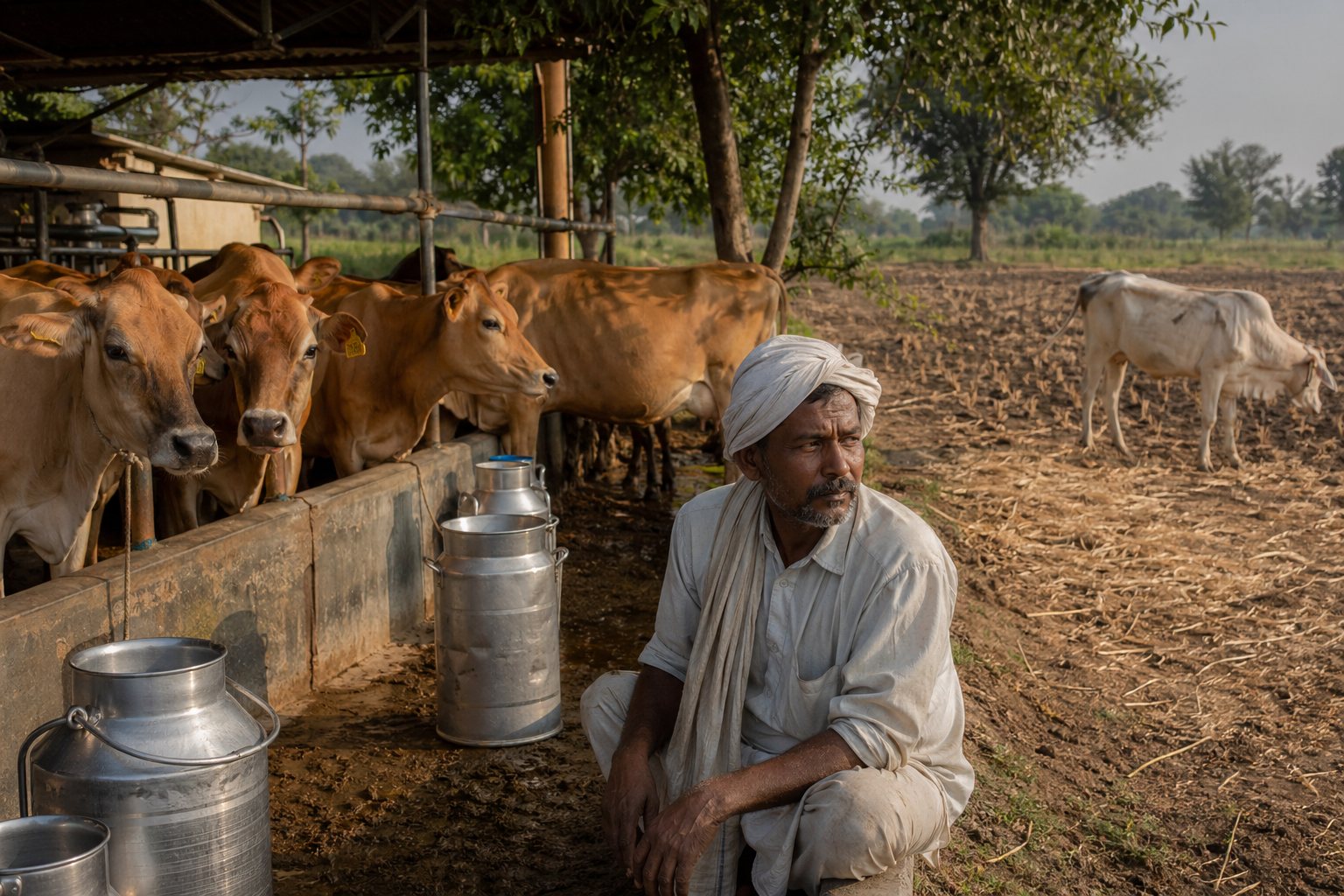
Over time, continuous neglect of soil health necessitated higher fertilizer doses, which reduced soil immunity, increased pest susceptibility, and raised the need for costly chemical pesticides. While chemical inputs and excessive irrigation were blamed, the critical role of soil health and indigenous cows remained overlooked.
Benefits
Enhances overall soil fertility and nutrient availability.
Soil Organic Carbon: Significant improvement achieved in 100 days.
Improves Soil Structure: Increases natural pore space for better air and water movement.
Maximizes Water Efficiency: Significantly improves the soil’s moisture storage capacity.
Enhanced Nutrient Efficiency: Boosts the crop’s ability to absorb water and vital nutrients.
Increases overall farm output and the quality of the crops.
Detoxifies the Soil: Actively neutralizes harmful toxins and reduces salt buildup in the root zone.
Boosts Soil Biodiversity: Creates the perfect environment for earthworms to thrive and naturally aerate your soil.