The Core
Challenge
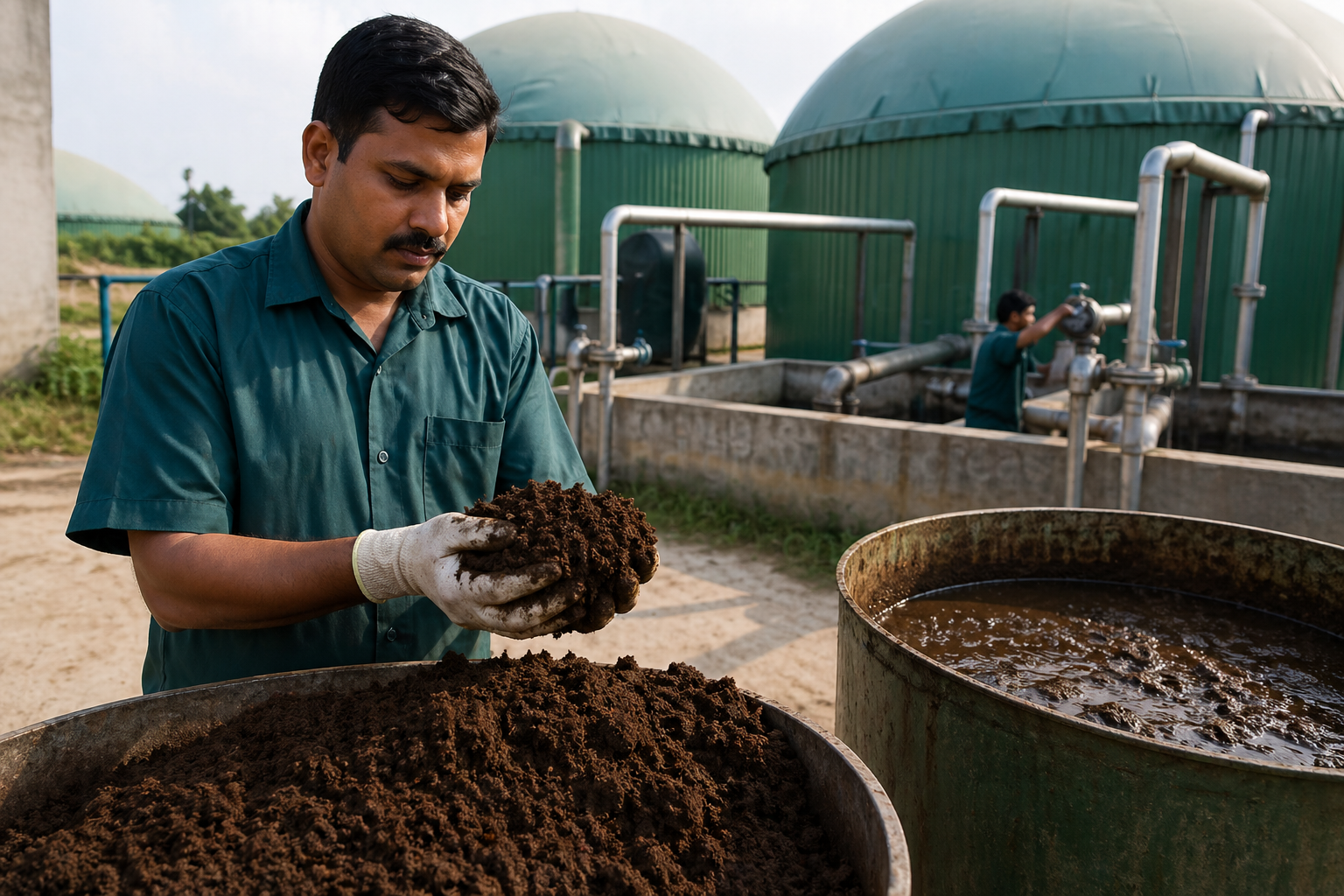
Most CBG plants do not underperform because of poor technology; they struggle because commissioning and daily operations are treated as purely mechanical startups rather than
biological system management.
While project developers invest heavily in world-class anaerobic digesters, high-efficiency compressors, and advanced gas purification systems, the
biological core is often neglected.
Microbial cultures are used as reactive measure while
adding them only during acute biological stress in the digester.
Consequently, digesters frequently lose stability due to:
- Organic and hydraulic shock loads.
- Toxicity build-up due to lack of sufficient microbial population.
- Weak or washed-out microbial biomass.
CBG plant operators must shift from a
MECHANICAL-FIRST MINDSET to a
BIOLOGY-FIRST APPROACH.
Concentrated
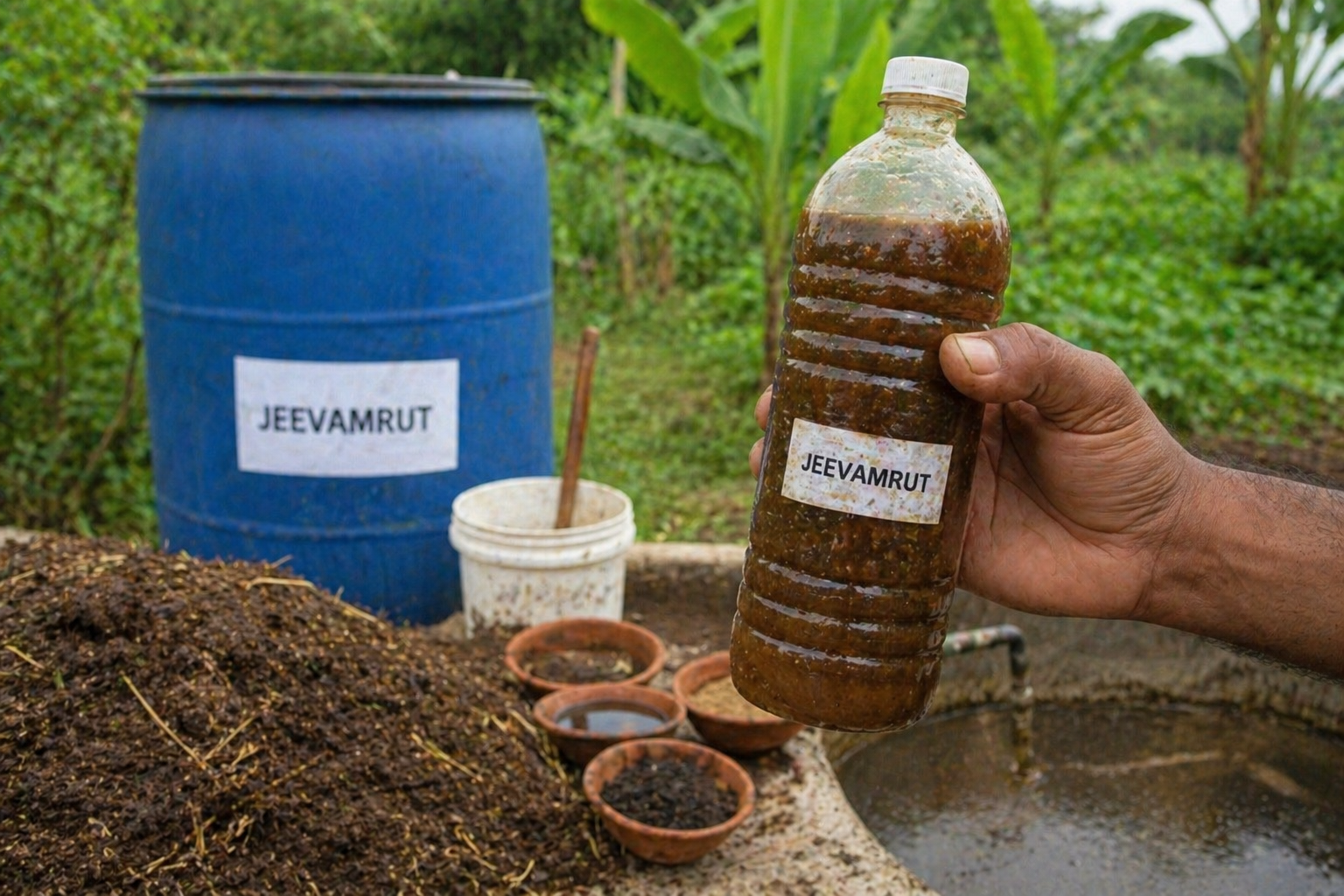
Jeevamrut
The Biological Catalyst
for Enhanced Biogas Production
Jeevamrut Concentrate offers an inevitable, bio-based solution to this operational challenge.
Jeevamrut Concentrate acts as a robust microbial culture. It introduces a diverse beneficial microbe in the digester capable of
synthesizing the specific extracellular enzymes required to degrade complex organic compounds.
Overcoming the
Lignocellulosic Barrier
Crop residues and plant-based raw materials are heavily composed of lignocellulose. The presence of lignin is
negatively correlated with biogas yield, acting as a physical and chemical barrier that reduces total gas recovery.
Raw Plant Waste
Lignin Barrier
Slow Decomposition
Low Biogas Yield
(Concentrated Jeevamrut Added)
▼
Enzymatic Breakdown
Rapid Fermentation
Maximum Gas Output
Targeted
Decomposition:
Concentrated Jeevamrut specializes in breaking down tough organic components such as
lignin, tannic acid, and complex oils.
Structure
Disruption:
Pre-treating or dosing the digester with Jeevamrut weakens the rigid, crystalline structure of lignin.
Accelerated
Digestion:
By dismantling this inhibitory shield, the easily degradable organic matter becomes readily available to methanogenic archaea, driving rapid decomposition and
maximizing methane yield.
Conclu
sion
By incorporating Concentrated Jeevamrut, CBG plant operators can transition from a volatile, unstable mechanical process to a highly resilient, high-yielding biological ecosystem. The dual benefit is clear:
optimized gas output at the front end, and
premium, microbe-enriched FOM at the back end—significantly improving the overall viability and profitability of the plant.